Research
Our laboratory advances precision medicine and public health through genomic technologies, artificial intelligence, and systems biology, investigating fundamental questions at the intersection of molecular genetics, neuroscience, and infectious disease epidemiology.
Core Research Themes

Neural Tube Defects
Employing systems biology and integrative genomics to advance our understanding of structural birth defects affecting the developing brain and spinal cord
Background: Neural tube defects (NTDs) are among the most common and severe congenital malformations worldwide, affecting approximately 1 in 1,000 pregnancies. These disorders result from failure of the neural tube to close properly during early embryonic development (days 21-28 post-conception), leading to conditions including spina bifida, anencephaly, and encephalocele. While folic acid supplementation has reduced NTD prevalence, significant cases persist, highlighting the complex genetic and environmental etiology.
Our laboratory investigates the complex molecular and genetic mechanisms underlying NTD pathogenesis using cutting-edge genomic technologies and computational approaches. We integrate population genomics, regulatory genomics, and systems-level network analysis to identify rare and common genetic variants contributing to NTD risk.
Key Research Questions
- What are the rare and common genetic variants that contribute to NTD risk?
- How do gene regulatory networks govern neural tube closure during embryonic development?
- Can machine learning predict NTD risk for precision genetic counseling?
- What gene-environment interactions contribute to NTD etiology?
- How can multi-omic integration reveal novel therapeutic targets?
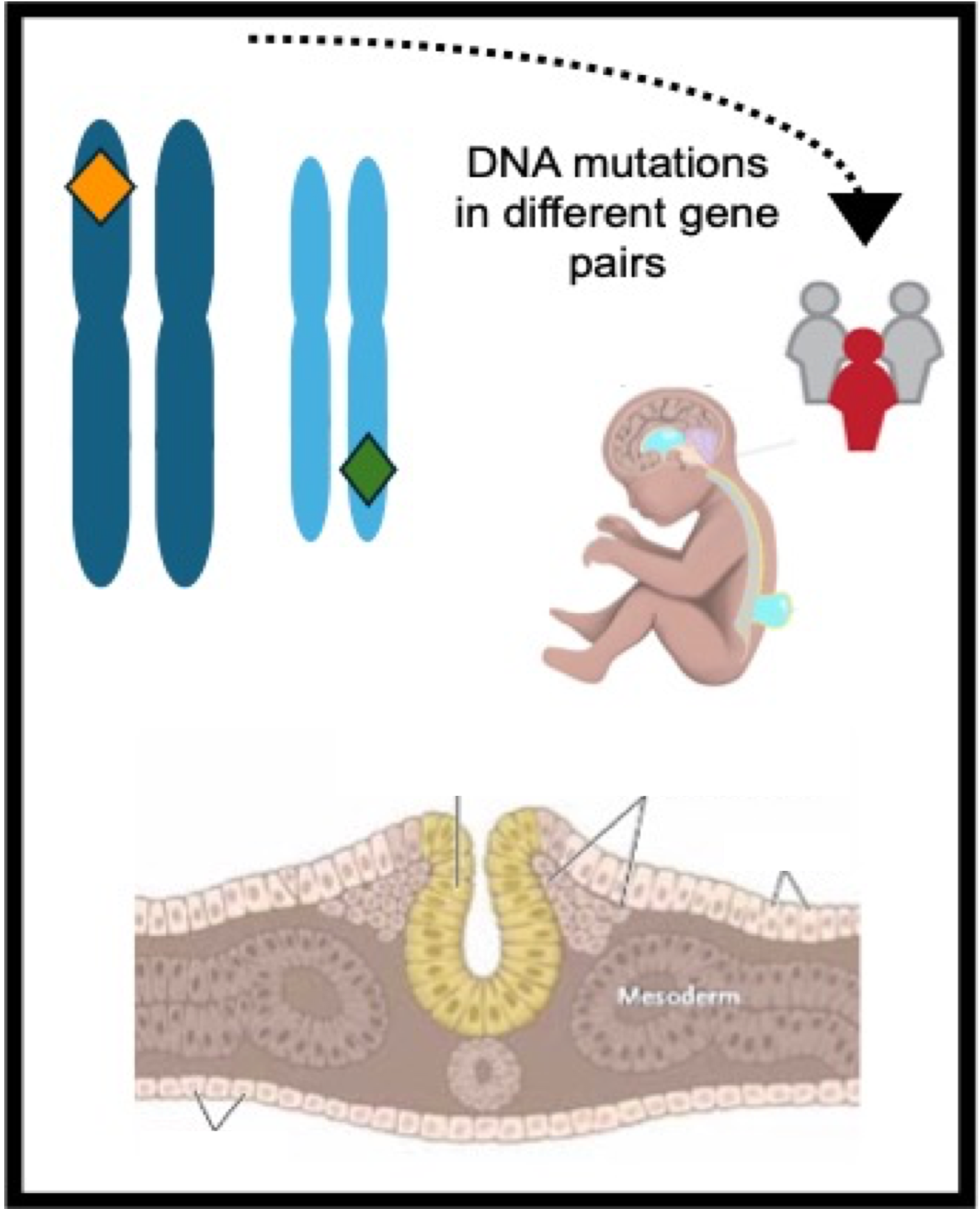
Spina bifida is a complex congenital condition whose genetic causes extend beyond traditional protein-coding mutations. Recently, we applied advanced computational genomics and deep-learning approaches to uncover how subtle changes in the regulatory regions of the genome can disrupt early neural tube development. By integrating whole-genome sequencing, transcription factor binding maps, and three-dimensional chromatin architecture, we identified rare regulatory variants that alter gene expression programs essential for nervous system formation. These findings highlight the importance of non-coding DNA in human birth defects and provide a new framework for precision-medicine approaches to understanding and ultimately preventing neural tube defects.

Leveraging case-parent trio cohorts, we are systematically analyzing combinations of rare variation transmitted from parental alleles to fully elucidate the genetic architecture of NTDs and delineate contributions from inherited versus de novo variants.
The Society for Birth Defects Research and Prevention advances understanding of birth defects through interdisciplinary research and global collaboration.
Autism Spectrum Disorder
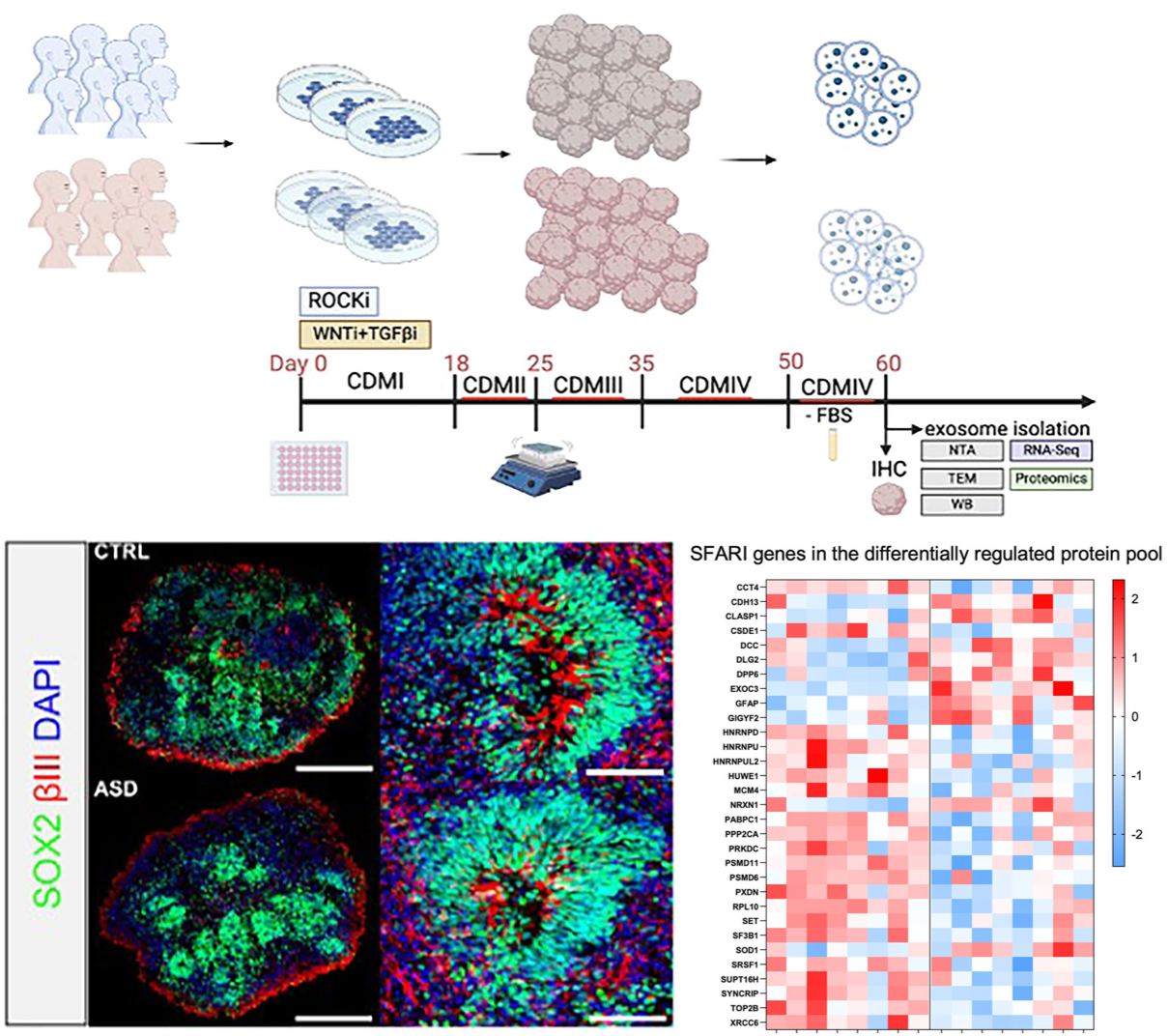
In collaboration with the Colak Lab at Weill Cornell Medicine, we recently leveraged patient-derived three-dimensional forebrain organoids to investigate how autism spectrum disorder (ASD) alters molecular communication during early brain development. By profiling extracellular vesicles—small particles that mediate cell-to-cell signaling—we identified striking differences in RNA and protein cargo between ASD and neurotypical organoids, implicating pathways involved in synaptic function, protein regulation, and chromatin remodeling. These findings uncover a previously underappreciated mechanism of disrupted cellular communication in autism and highlight extracellular vesicles as promising biomarkers and therapeutic targets for neurodevelopmental disorders.

Multiple Sclerosis
We are working closely with the Mandell Center for Comprehensive Multiple Sclerosis Care and Neuroscience Research to advance understanding of myelin pathology, collaboratively studying genetic variants, transcriptional programs and signaling pathways that may underlie MS or contribute to disease risk.

Neurogenetic Disorders
Investigating the multi-omic signatures of complex neurogenetic conditions through advanced computational approaches and high-throughput genomic technologies
Background: Complex neurogenetic disorders affect millions globally and arise from intricate interactions between multiple genes and environmental factors. Multiple sclerosis (MS), affecting ~2.8 million people worldwide, involves autoimmune-mediated demyelination driven by both genetic susceptibility and environmental triggers. Autism spectrum disorder (ASD) affects 1 in 36 children in the U.S., with heritability estimates of 70-90% yet remarkable genetic heterogeneity involving hundreds of risk loci. Understanding these polygenic conditions requires integrative multi-omic approaches to decode disease mechanisms.
Our research integrates genomic, transcriptomic, epigenomic, and proteomic data to decode molecular disease mechanisms and identify precision medicine strategies for conditions including multiple sclerosis, autism spectrum disorder, and schizophrenia.
Key Research Questions
- How can multi-omic integration reveal disease biomarkers and subtypes?
- What machine learning approaches best classify neurogenetic disorders?
- How does cellular heterogeneity contribute to disease manifestation?
- What gene-gene and gene-environment networks drive pathogenesis?
- Can computational models enable personalized therapeutic strategies?
Public Health Metagenomics
Leveraging long-read metagenomic sequencing to advance epidemiological surveillance of vector-borne pathogens and improve public health monitoring
Background: Vector-borne diseases account for more than 17% of all infectious diseases globally, causing over 700,000 deaths annually. In the northeastern United States, blacklegged ticks (Ixodes scapularis) transmit numerous pathogens including Borrelia burgdorferi (Lyme disease), Anaplasma phagocytophilum, Babesia microti, and emerging pathogens like Borrelia miyamotoi and Powassan virus. Climate change and expanding tick habitats are driving increased disease incidence, necessitating enhanced surveillance strategies.
Our laboratory employs Oxford Nanopore long-read sequencing to generate comprehensive pathogen profiles from field-collected ticks and develop real-time surveillance strategies through partnerships with the Connecticut Agricultural Experiment Station and state health departments. This work enables rapid pathogen detection, community composition analysis, and public health decision-making.
Key Research Questions
- What is the diversity of tick-borne pathogen communities in Connecticut?
- How can bioinformatics enable rapid pathogen detection and classification?
- What temporal and spatial patterns drive pathogen prevalence?
- Can environmental and climate data predict pathogen emergence?
- How do we translate genomic surveillance into public health action?
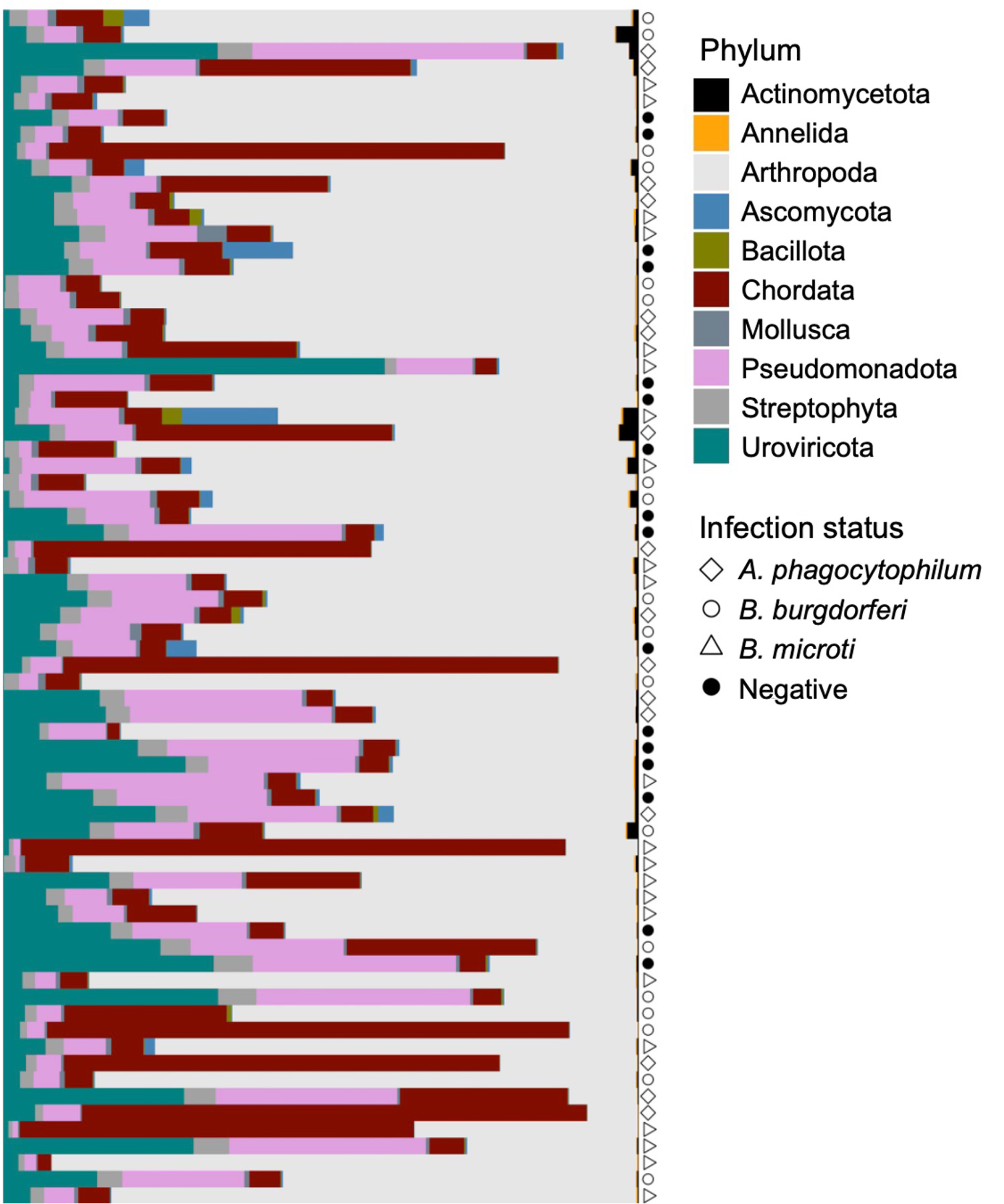
We present a portable, real-time genomic surveillance pipeline using Oxford Nanopore long-read sequencing to enable unbiased detection of tick-borne pathogens directly from blacklegged ticks. Working in partnership with the Connecticut Agricultural Experiment Station (CAES), we developed and validated a metagenomic workflow capable of simultaneously identifying bacterial, protozoal, and viral pathogens while preserving quantitative signal. The approach demonstrates strong precision, supports future strain-level genomic resolution, and illustrates how next-generation sequencing can enhance public health surveillance and early detection of emerging vector-borne disease threats.

Microbial diversity across 72 Ixodes scapularis specimens. We are currently investigating de novo assembly for these pathogens as well as looking into transcriptomic and metatranscriptomic analyses.
CAES is a nationally recognized public research institution that conducts applied and basic scientific investigations in agriculture, public health, and environmental sciences, including statewide surveillance and research on vector-borne diseases.