Latest News in the Wolujewicz Lab
Updates, achievements, and milestones from our research group
Brandon Assi Presents at 71st Annual NMCA Meeting
Brandon Assi presents his Master's thesis work at the 71st Annual Meeting Northeastern Mosquito Control Association Conference in Hyannis, MA. His research focuses on Nanopore metagenomic sequencing for real-time vector-borne pathogen surveillance in collaboration with the Connecticut Agricultural Experiment Station.
Dr. Wolujewicz Appointed as CAES Research Affiliate
Dr. Wolujewicz is appointed as a CAES Research Affiliate. This appointment formalizes ongoing collaborations with the Connecticut Agricultural Experiment Station and strengthens joint efforts in vector-borne pathogen genomics and public health surveillance.
Quinnipiac Netter Students Working in the Wolujewicz Lab Present at the 2025 ASHG Annual Meeting
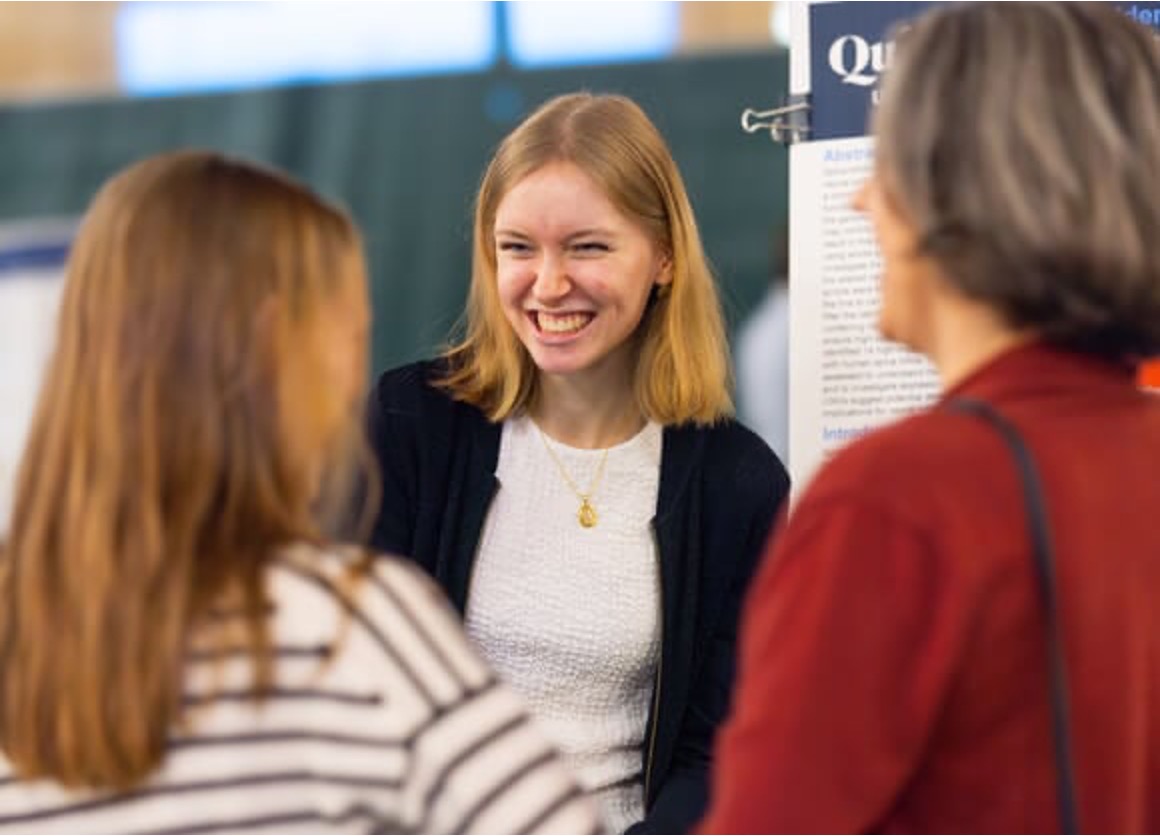
Members of the Wolujewicz Lab had a strong presence at the American Society of Human Genetics (ASHG) Annual Meeting, highlighting multiple advances in neurogenetics research. Phil Smit (M4) co-authored a recently accepted manuscript in Translational Psychiatry entitled "Extracellular Vesicle Profiling Reveals Novel Autism Signatures in Patient-Derived Forebrain Organoids" and was selected to deliver a platform presentation at ASHG, an especially competitive and prestigious honor. Alan Chai (M3) presented a poster examining the contribution of short tandem repeat expansions to the genomic architecture of central nervous system structural birth defects, leveraging genome-wide computational detection methods and a novel machine-learning framework for pathogenicity prediction; his abstract received a Reviewers' Choice designation, placing it in the top 10% of accepted posters. In parallel, Rachel Schlak and Katrina Etts (M3) presented work exploring a digenic inheritance model for neural tube defect risk, introducing a prioritization strategy for maternally and paternally inherited variant combinations with potential clinical relevance for genetic counseling and family planning.
Read the Quinnipiac Today article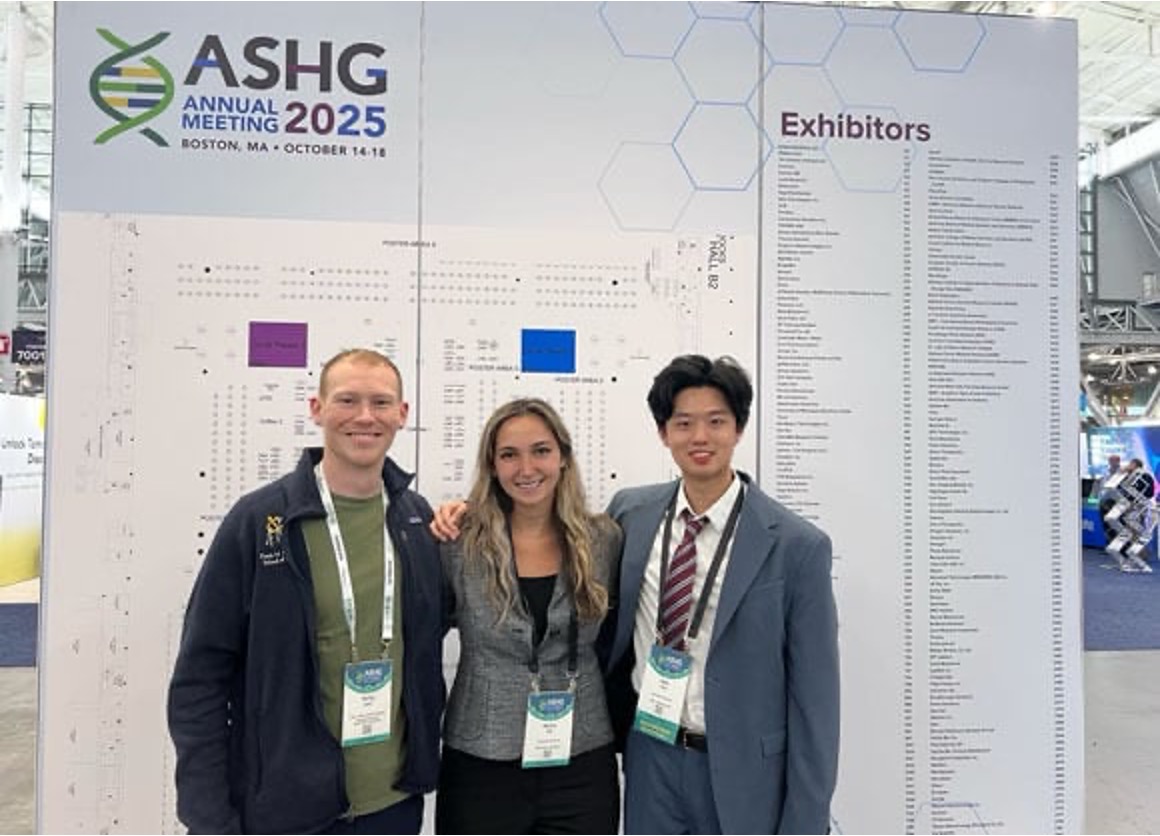
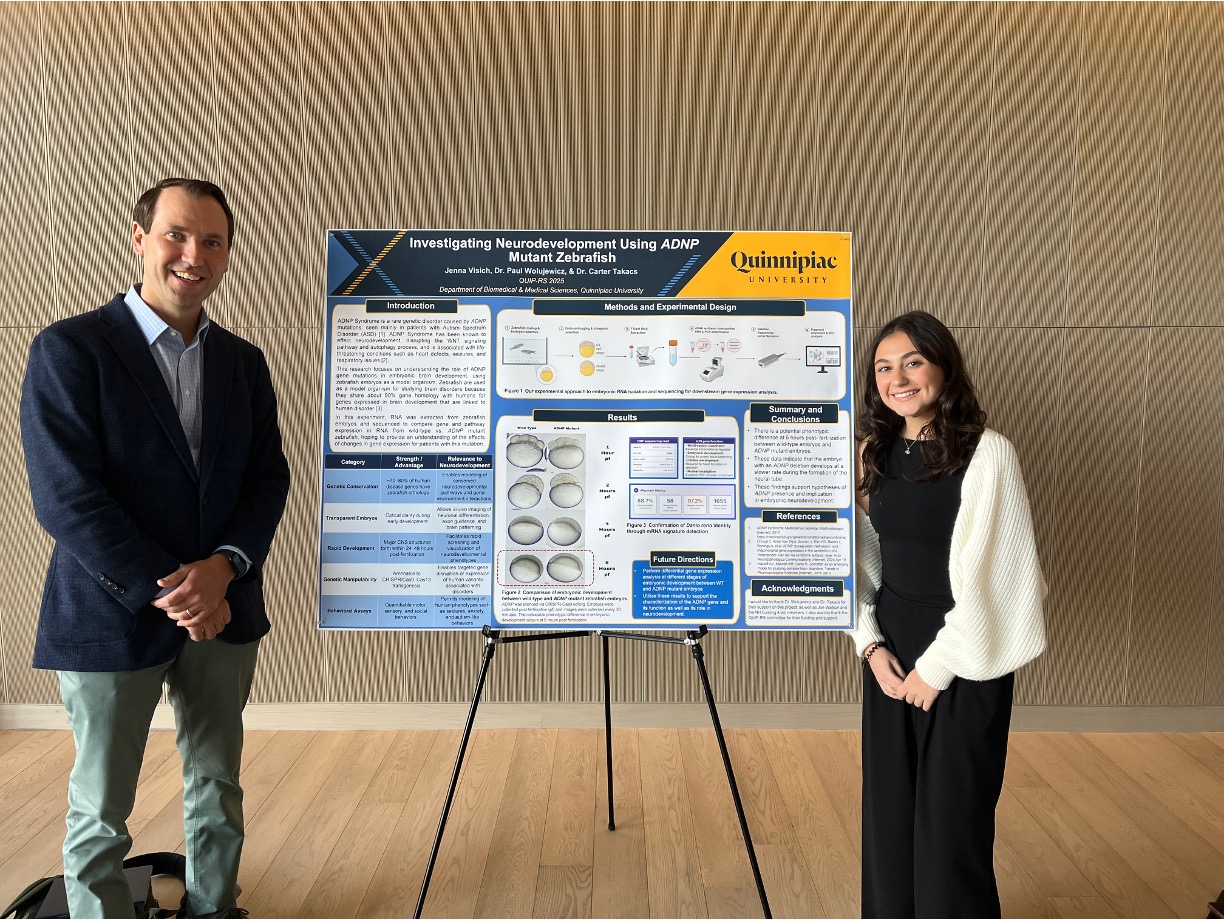
QUIP-RS Undergraduate Researchers Present at Bobcat Weekend
During Quinnipiac University's 2025 QUIP-RS Summer Research Program, the Wolujewicz Lab co-mentored two undergraduate researchers, Jenna Visich and Jesse Matijevic, on independent genomics-focused projects spanning neurodevelopmental biology and infectious disease genomics. Jenna investigated brain development using RNA-seq analyses in ADNP mutant zebrafish models (co-mentored with Dr. Carter Takacs), while Jesse explored genome assembly strategies for Borrelia burgdorferi from both Ixodes scapularis vectors and cultured pathogen samples. Both students successfully presented their research during Bobcat Weekend, highlighting the lab's continued commitment to interdisciplinary, student-driven research and mentorship from project inception through public dissemination.
Dr. Wolujewicz Approved for Regular Membership in BDRP
Dr. Wolujewicz was approved for Regular Membership in the Society for Birth Defects Research and Prevention (BDRP). This appointment reflects the lab's ongoing contributions to research on neural tube defects and other congenital disorders, and provides an important platform for scientific exchange, collaboration, and leadership within the birth defects research community.
Visit BDRP website
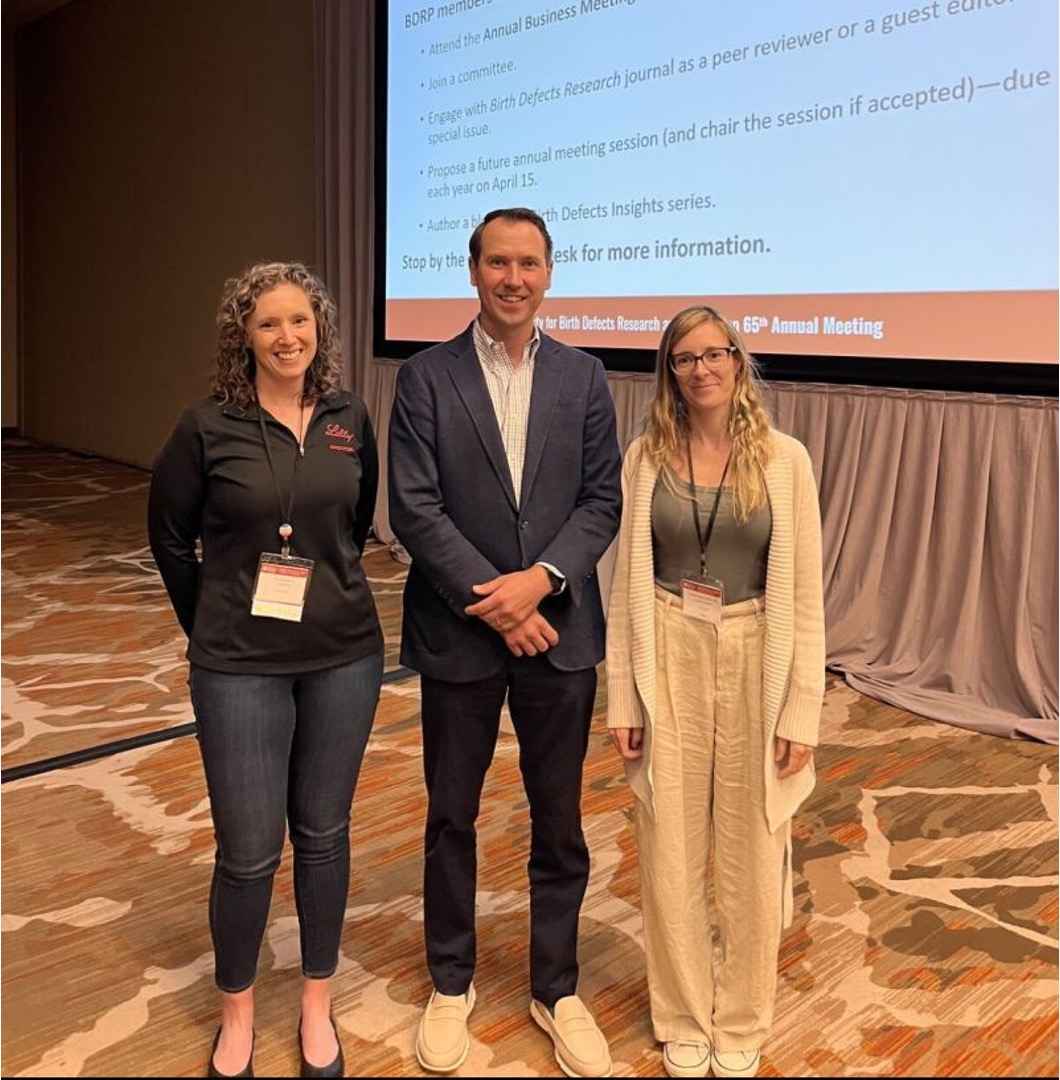
Invited Speaker at BDRP Annual Meeting in Denver
Dr. Wolujewicz served as an invited speaker and mini-course lead at the 65th Annual Meeting of the Society for Birth Defects Research and Prevention (BDRP) in Denver, Colorado. He led a focused mini-course on Artificial Intelligence in Genomics, highlighting emerging AI-driven approaches for variant interpretation, multi-omic integration, and disease risk modeling in the context of congenital disorders and neurodevelopmental disease.
Session Chair at NEURON Conference
Dr. Wolujewicz chaired the session "AI Tools in Neurobiology" at the annual NEURON Conference, co-hosted by Quinnipiac University and University of Connecticut. The session brought together researchers applying artificial intelligence and computational approaches to neurobiological questions spanning neurodevelopment, disease modeling, and data-intensive neuroscience.
Outstanding Mentor Awards and Gribbin Receives Wikel Scientific Scholarship Award
At the annual Capstone Scholars Day for the Frank H. Netter School of Medicine, John Gribbin (MD'25) was awarded the Stephen Wikel, PhD Scientific Scholarship Award for his outstanding capstone research. Dr. Paul Wolujewicz and Dr. James K. Soda were jointly recognized as Outstanding Capstone Mentors for 2025, honored for their exceptional mentorship and dedication to fostering student research careers. Their collaborative guidance helped shape John's project and exemplified the values of curiosity, perseverance, and ingenuity in pursuit of bettering the lives of others.

Kaylee Pettengill Presents at QUIP-RS Research Symposium
As part of the 2024 QUIP-RS Research Symposium held during Bobcat Weekend, Kaylee Pettengill presented her undergraduate research project, "Identifying Structural Variation in Spina Bifida Patient Genomes," conducted in the Wolujewicz Lab. Her work applied whole-genome sequencing and case-parent trio analyses to identify copy number variants and other structural genomic alterations that may contribute to neural tube defect risk.
Platform Presentation at 13th International Conference on Neural Tube Defects
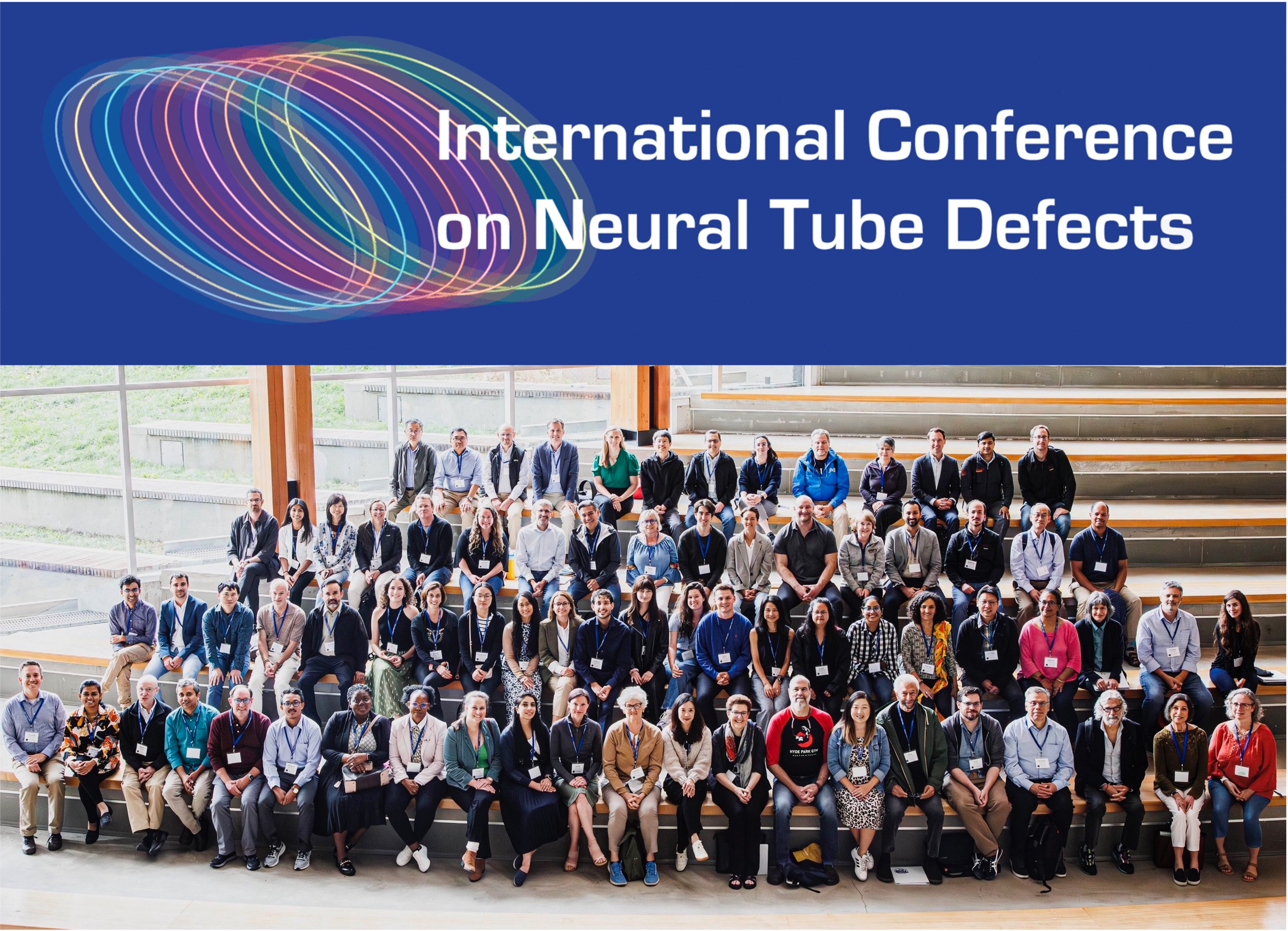
Dr. Wolujewicz was accepted to deliver a platform presentation at the 13th International Conference on Neural Tube Defects, an international forum bringing together leading investigators in developmental biology, genetics, and birth defects research. The presentation entitled, "Evidence for Pathogenic Expansions in NTD Case-Parent Trios," highlights ongoing work from the Wolujewicz Lab focused on the genetic architecture of neural tube defects using family-based genomic analyses. The acceptance reflects the growing international recognition of the lab's contributions to neurogenetics and congenital disorder research.
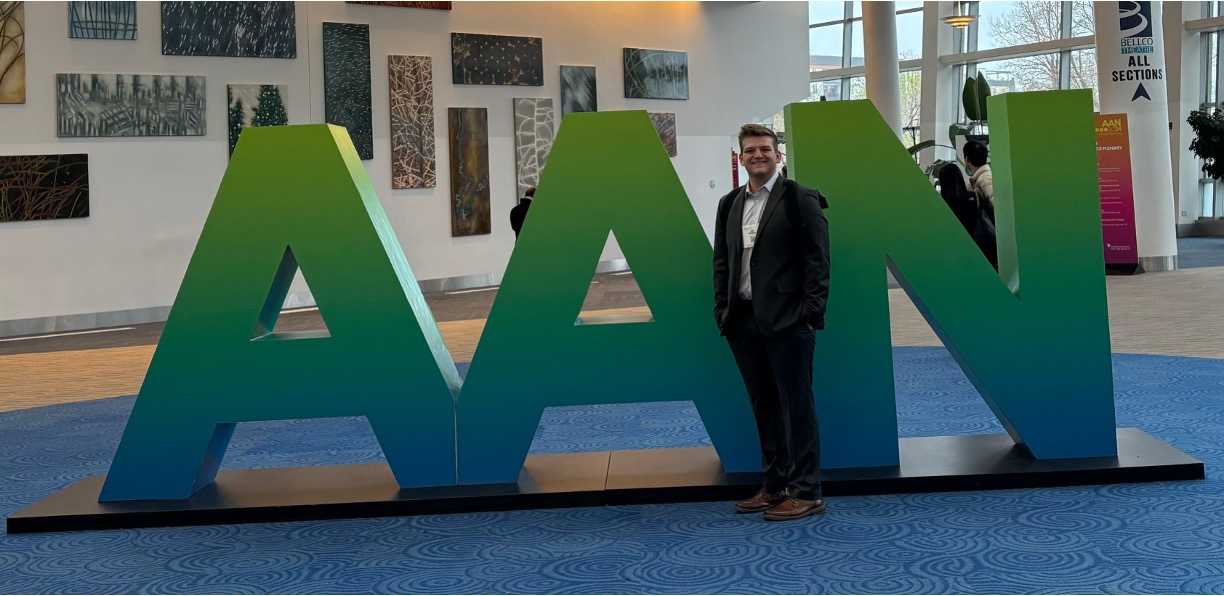
John Gribbin Presents at American Academy of Neurology Annual Meeting
In April 2024, John Gribbin delivered a platform presentation at the American Academy of Neurology (AAN) Annual Meeting entitled "X Chromosome Analysis in Multiple Sclerosis for Identification of Genes Implicated in Female-biased Disease Presentation." His talk focused on computational analysis of X chromosome gene expression in multiple sclerosis, with the goal of identifying genes that may contribute to the well-recognized sex differences in MS prevalence and clinical course.